

Ever wondered how many transistors are packed inside your CPU? It’s a fair question, and the numbers might surprise you.
I’ve spent time researching modern processors, and I’ll break it all down here, no fluff.
In this article, you’ll find exact transistor counts in today’s CPUs, how the numbers have changed over time, what actually affects transistor count, and why more transistors don’t always mean better performance.
By the end, you’ll know exactly what to look for, and what to ignore.
How Many Transistors in a CPU Today?
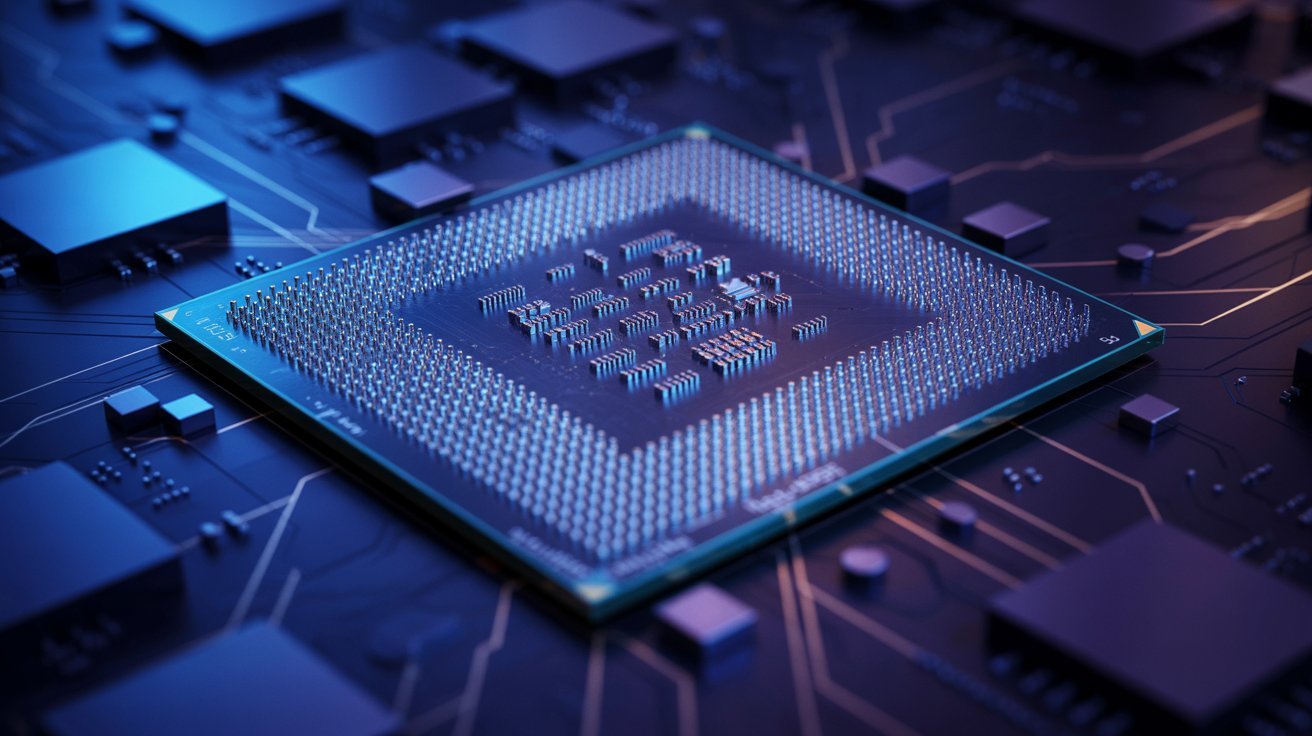
Modern CPUs pack more transistors than most people can picture. We’re talking billions, not millions.
Desktop CPUs today typically range from 10 billion to over 50 billion transistors, while mobile chips can go even higher.
The Apple M2 Ultra leads at 134 billion, the Intel Core i9-13900K sits at around 25.9 billion, and the AMD Ryzen 9 7950X comes in at 13.14 billion.
In 2025, 3nm chips are pushing counts well past 100 billion as Apple, AMD, and Intel race toward higher density without increasing chip size.
How Many Transistors in a CPU Over Time
Transistor counts have gone from a few thousand to over 100 billion in just decades. Here’s how that happened.
Early CPUs vs Modern CPUs
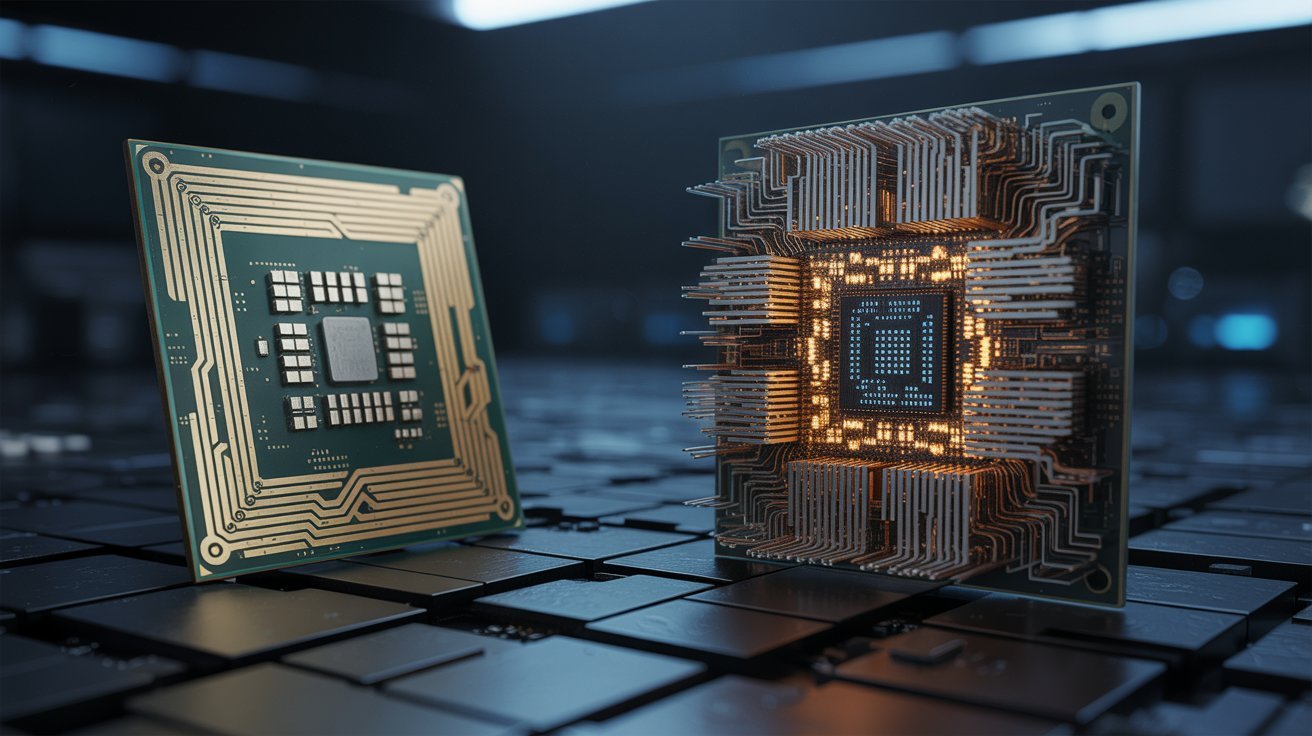
The first CPUs were tiny by today’s standards. The Intel 4004, released in 1971, had just 2,300 transistors. The Intel 8086 in 1978 had around 29,000.
Fast forward to today, and a single chip can hold over 100 billion. That’s not just growth, it’s a completely different scale.
Timeline of Transistor Growth
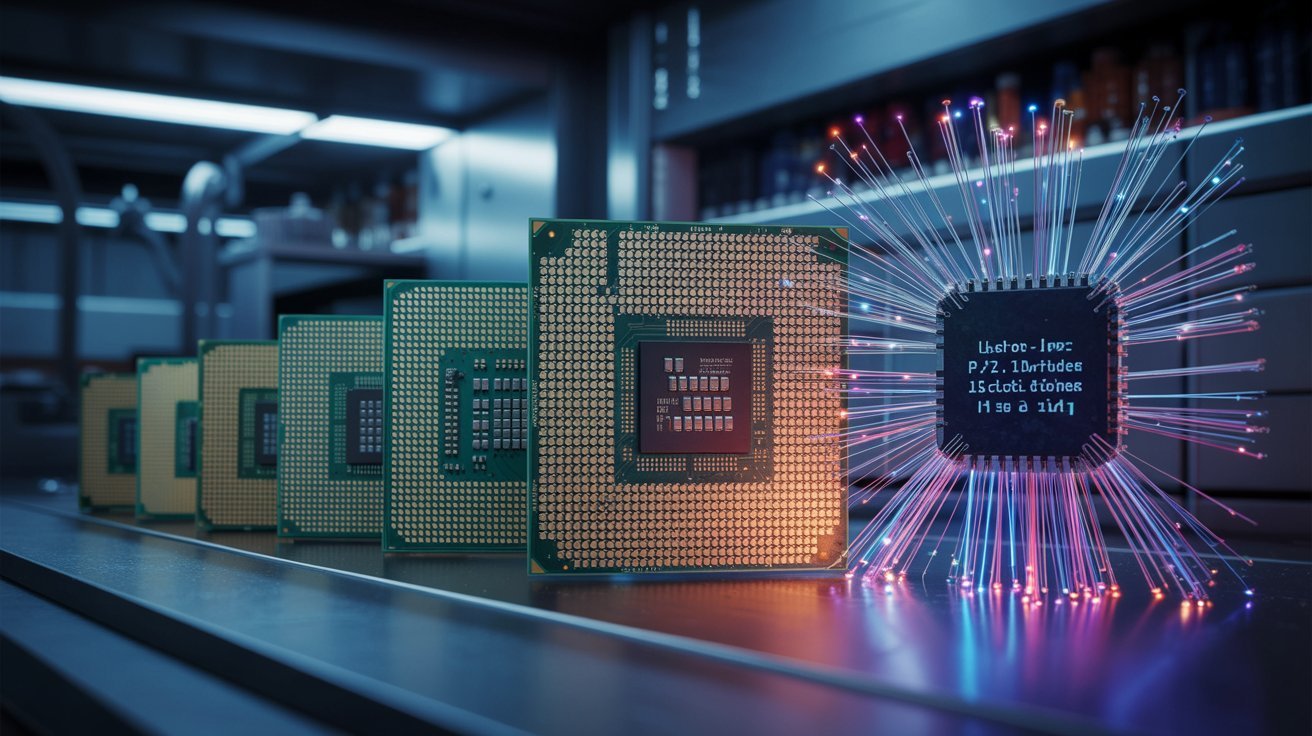
In 1971, the Intel 4004 had just 2,300 transistors. By 1989, the Intel 486 hit 1.2 million. The Pentium 4 reached 42 million in 2000, and Intel’s Ivy Bridge crossed 1.4 billion by 2012. The Apple M1 brought 16 billion in 2020, and the M2 Ultra hit 134 billion in 2022. Today, 3nm chips are pushing well past 100 billion.
Why Transistor Count Matters in a CPU
Transistor count tells you a lot about a chip, but it’s not the whole story. Here’s what it actually affects.
Impact on Performance
More transistors generally mean faster processing, better multitasking, and greater power efficiency. Smaller transistors use less energy per task, so your chip can do more without draining your battery or running hot.
Transistor Count vs Performance
Here’s the thing, more transistors don’t always mean a faster CPU for your use case. A chip with 100 billion transistors built for servers won’t help you edit videos faster if the architecture isn’t right.
Clock speed, instruction efficiency, and memory bandwidth all play a role too. Transistor count is one piece of the puzzle, not the whole picture.
How Transistor Count Compares Across CPU Brands
Not all chips are built the same way, and the numbers reflect that.
Apple vs AMD vs Intel
Apple’s M-series chips lead by packing the CPU, GPU, and AI engine into one chip. The M2 Ultra has 134 billion transistors, the i9-13900K has 25.9 billion, and the Ryzen 9 7950X has 13.14 billion.
| CPU | Brand | Transistor Count | Process Node |
|---|---|---|---|
|
Apple M2 Ultra |
Apple |
134 billion |
5nm |
|
Intel Core i9-13900K |
Intel |
25.9 billion |
10nm (Intel 7) |
|
AMD Ryzen 9 7950X |
AMD |
13.14 billion |
5nm |
|
Apple M1 |
Apple |
16 billion |
5nm |
|
Intel Core i7-13700K |
Intel |
25.9 billion |
10nm (Intel 7) |
|
AMD Ryzen 7 7700X |
AMD |
6.57 billion |
5nm |
What This Means for You

For a Windows PC, AMD and Intel are your main options and both perform well. If you use Apple, the M-series chips offer great efficiency. The transistor count difference comes down to chip design philosophy, not just raw performance, so don’t let the numbers alone make your decision.
What Happens If a Transistor in a CPU Fails?

Transistors can fail, but CPUs are built to handle it. Here’s what actually happens.
Minor vs Critical Failures
A single transistor failing usually doesn’t kill a CPU. Most failures happen during manufacturing, not while in use.
A minor failure in a non-critical area often goes unnoticed, while a critical one in the core logic or memory controller can cause crashes or a dead chip.
CPU Redundancy and Binning
Chip makers handle failures through a process called binning. When a chip comes off the production line, it gets tested.
If some cores or features have defects, those areas are disabled and the chip is sold as a lower-tier product. That’s actually how many budget CPUs are made, same silicon, just with some parts turn
Key Factors That Determine Transistor Count

Several design choices shape how many transistors end up in a CPU.
CPU Architecture
The way a chip is designed matters a lot. Some architectures are more efficient, meaning they can do more with fewer transistors. A well-designed chip at 10 billion transistors can outperform a poorly designed one at 20 billion.
Number of Cores
Each core needs its own set of transistors. More cores mean more transistors. A 16-core CPU will have significantly more transistors than a 4-core chip from the same family.
Manufacturing Process (nm Technology)
The smaller the nanometer process, the more transistors can fit in the same space. Moving from 7nm to 5nm to 3nm lets chip makers pack in more without increasing chip size.
Cache Size
Cache memory, the fast storage built into the CPU, uses a huge number of transistors. A chip with a large L3 cache will have a noticeably higher transistor count because of it.
Integrated Features (AI, GPU, etc.)
Modern chips often include more than just a processor. AI engines, integrated graphics, memory controllers, and neural processors all add transistors. Apple’s M-series chips are a good example, with everything packed into one chip.
Tips to Choose a CPU
Transistor count is interesting, but here’s what to actually look at when buying a CPU.
- Core count matters more than transistor count for most everyday tasks.
- High clock speeds give you better performance in gaming.
- Content creation works best with 12 or more cores.
- Don’t overspend on a workstation chip for basic office work.
- Any modern mid-range chip handles general use just fine.
- Check TDP to know how much heat and power a chip uses.
Conclusion
Transistor count is a fascinating number, but it’s just one part of what makes a CPU good.
I used to think higher always meant better. Honestly, it took a few bad purchases to realize that architecture, clock speed, and real-world benchmarks matter way more for everyday use.
So next time you’re picking a CPU, look at how many transistors are in a CPU, but don’t stop there.
Think about your actual needs. Drop a comment below. I’d love to know what CPU you’re using right now.
Frequently Asked Questions
How many transistors are in a CPU today?
Most modern CPUs have between 10 billion and 134 billion transistors. The count varies based on the chip design, architecture, and what the CPU is built for.
How many transistors are in a CPU in 2025?
In 2025, top CPUs built on 3nm technology are pushing well past 100 billion transistors. Apple, AMD, and Intel are all moving toward higher-density chips this year.
Do more transistors mean better performance?
Not always. More transistors can mean more features and better efficiency, but performance also depends on architecture, clock speed, and how the chip handles specific tasks.
How many transistors are in an i9 CPU?
The Intel Core i9-13900K has around 25.9 billion transistors. Newer i9 generations may vary slightly depending on the manufacturing process used.
Can a CPU work if one transistor fails?
Yes, in most cases. CPUs are built with redundancy, and minor failures are handled through a process called binning, where faulty sections are disabled rather than scrapping the whole chip.